
English
Securing expansive commercial lots or vast agricultural estates presents unique engineering challenges. Standard off-the-shelf security fixtures are rarely up to the task. When attempting to capture critical details like license plate numbers from hundreds of feet away, conventional equipment fails. You get severe pixelation, a restrictive field of view, and inadequate night illumination. How do you bridge this gap? Specialized surveillance technology engineered for extreme distances is the only answer. This guide breaks down the precise hardware specifications required for effective long-range monitoring.
Optical Zoom is Non-Negotiable: True optical magnification physically adjusts the lens to preserve pristine image quality. It avoids the pitfalls of software-based digital enlargement.
Mobility Matters: Advanced motorized mobility allows a single device to actively scan and track targets across massive areas.
Resolution and Sensors: High-megapixel counts must be paired with oversized image sensors. This captures actionable detail from afar.
Night Vision Capabilities: Specialized long-range infrared and Super Starlight technologies guarantee uninterrupted visibility in pitch-black environments.
The Core Engine: A robust internal processing module ensures rapid data transmission and seamless integration with continuous recording platforms.
In professional security, long-range means distances spanning from 100 feet to well over 1,000 feet. The objective shifts dramatically at these extremes. You are no longer just looking for a blurry silhouette crossing a perimeter. You need precise identification. Standard wide-angle indoor lenses fail entirely outdoors. Their focal length disperses available pixels over too wide an area. Consequently, distant subjects become completely unrecognizable.
Relying on digital zoom for perimeter security is a critical engineering mistake. This software-driven process simply crops and enlarges existing pixels. Digitally zooming in on a target 300 feet away yields a blocky and distorted image. It holds zero evidentiary value.
In contrast, optical zoom relies on intricate physical mechanics. The camera physically extends the lens to magnify the distant scene before light hits the sensor. The footage retains its native resolution. You get court-admissible clarity regardless of the magnification level.
To achieve this precision, industrial systems rely on integrated lens-and-sensor arrays. A dedicated Zoom Block CCTV Camera serves as the gold standard for long-range identification. Top-tier models feature 25X to 40X optical magnification. These powerful modules ensure distant focal points remain strikingly clear.
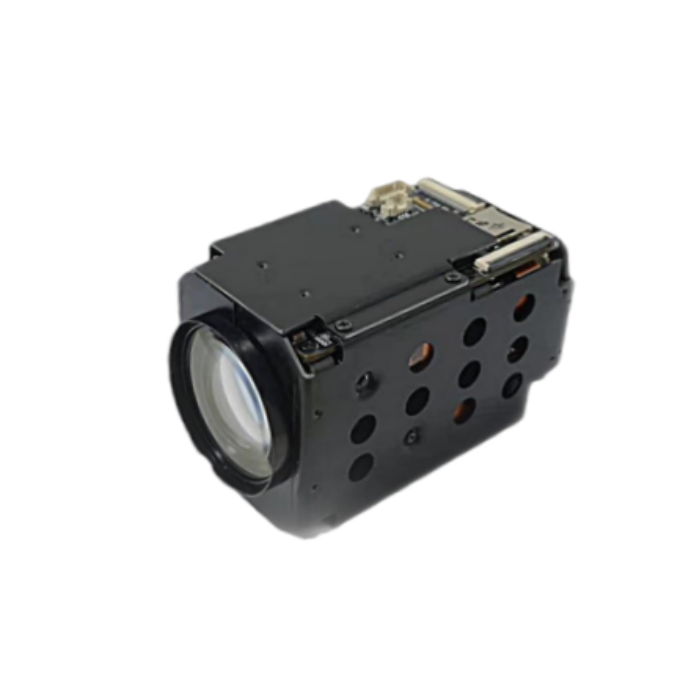
A fixed lens works perfectly well for a single choke point. However, sprawling environments demand flexibility. Deploying a Pan-Tilt-Zoom PTZ CCTV Camera introduces dynamic mobility. These units rotate 360 degrees horizontally and tilt vertically. One strategically placed device can effectively replace half a dozen static cameras. It sweeps massive commercial lots without blind spots.
Furthermore, intelligent software elevates system autonomy. Modern surveillance units feature auto-tracking capabilities. The camera autonomously identifies a trespassing vehicle and actively follows it. Administrators can also program preset patrols to scan high-risk zones at scheduled intervals.
There is a pervasive belief that higher megapixels automatically equate to better surveillance. An 8MP resolution is undeniably vital for long-range viewing. It provides a dense digital canvas. But without the right physical hardware, those pixels are completely wasted.
The true secret weapon in extreme-distance monitoring is the physical size of the image sensor. A larger sensor fundamentally captures more ambient light. Long telephoto lenses naturally restrict light intake when fully zoomed in. Therefore, a massive sensor prevents the image from turning dark and noisy. Integrating an 8MP 1/1.8-inch CMOS sensor ensures pristine clarity.
Looking at current industry trajectories, market analysts note a definitive shift in the long-range surveillance sector. Rather than merely escalating megapixel counts, top-tier deployments are prioritizing ultra-large CMOS sensors paired with edge-based analytics. This evolution addresses the historical bottleneck where high-resolution lenses severely degraded low-light performance. Extreme-distance cameras now maintain pristine clarity even in the most challenging environmental conditions.
Criminal activity frequently occurs under the cover of darkness. Robust night vision is non-negotiable. Standard infrared capabilities typically max out at 50 feet. To pierce the darkness across expansive lots, surveillance gear requires specialized high-power IR LEDs. Focused laser IR technology can even illuminate subjects from over 1,000 feet away.
Specifically, environments where color detail is critical require Super Starlight technology. Identifying the exact paint color of a fleeing vehicle at 2 AM is a common field challenge. These hyper-sensitive sensors utilize minute amounts of ambient illumination. They render vivid full-color images at night, vastly outperforming traditional black-and-white infrared.
Behind the heavy-duty glass and motorized gimbals lies the true engine of the system. An IP CCTV Camera Module ingests raw optical data. It manages split-second autofocus routines during rapid panning and handles seamless network transmission.
A robust processing core ensures smooth video streams at high frame rates. It easily pushes heavy 4K data loads. Moreover, these advanced modules empower built-in artificial intelligence. Executing human and vehicle classification algorithms directly on the edge drastically reduces false alarms.
Selecting the right equipment begins with a precise calculation of your operational environment. A 4X optical zoom might secure a residential driveway. But monitoring a commercial perimeter fence half a mile away demands a 25X or 36X optical lens. Carefully measure the distance from your intended mounting point to the critical choke points.
To make this easier, we have compiled a core comparison table. Use this standard to match your specific site requirements with the correct hardware specifications.
Distance Requirement | Recommended Optical Zoom | Ideal Sensor Size | Night Vision Tech | Best Application |
|---|---|---|---|---|
50 - 150 ft | 4X - 10X | 1/2.8-inch | Standard IR | Driveways, Small Lots |
150 - 300 ft | 10X - 25X | 1/2.8-inch | Long-Range IR | Warehouses, Perimeters |
300 - 800+ ft | 25X - 40X | 1/1.8-inch | Super Starlight / Laser IR | Borders, Ports, Highways |
In addition to optics, evaluate your infrastructure. Power over Ethernet simplifies installation. For remote agricultural borders, long-range wireless bridges offer a reliable alternative.
Mastering long-range monitoring requires far more than just a basic security lens. It demands a sophisticated synergy of specialized features. You need the raw magnifying power of dedicated optical blocks, the sweeping mobility of pan-and-tilt mechanics, light-devouring sensors, and high-performance processing modules. Investing in purpose-built hardware upfront avoids the costly frustration of blurry security footage. Whether securing a corporate facility or a vast private estate, carefully evaluating these technical specifications ensures your perimeter remains uncompromised.
Evaluate your site requirements and choose the right equipment from FutureVision. Visit https://www.futurevision-cctv-camera.com to explore our catalog of extreme-distance motorized cameras and find the perfect match for your property.
The effective range is entirely dependent on the lens and sensor combination. Standard equipment maxes out at 50 feet of clarity. A specialized unit equipped with a 25X optical zoom can clearly identify a face or read a license plate from 300 to over 800 feet away. For extreme industrial applications, laser-assisted devices detect signatures from several miles away.
A fixed long-range camera is designed to stare constantly at one specific distant choke point. In contrast, a Pan-Tilt-Zoom model features motorized joints. Operators or automated software can sweep across a 360-degree area. It dynamically shifts focus and zooms in on multiple targets as situations unfold.
Not necessarily. Higher megapixels like 8MP provide a denser image. But they are virtually useless at long distances without physical optical zoom. Megapixels only allow you to digitally enlarge an image that has already been optically magnified by the glass lens. They cannot compensate for a lack of true optical reach.
Yes, provided they are equipped with the correct specialized features. Nighttime license plate capture requires powerful optical zoom and high-intensity targeted infrared illumination. It also relies on crucial software features like Highlight Compensation to actively block the blinding glare of vehicle headlights.
This device is a highly specialized internal module housing the lens, image sensor, and complex zoom motors. Rather than being a standalone camera, it is typically integrated into larger heavy-duty housings. It provides the extreme high-precision optical magnification required for securing expansive commercial properties.
IP network cameras are vastly superior for extreme distances. They support much higher resolutions like 8MP and 4K. They also enable advanced edge-based AI analytics and seamless integration with complex software platforms. Analog systems simply cannot process the heavy data loads required for crisp distant identification.
Heavy rain, fog, and snow can severely scatter light and reduce visibility. Professional industrial cameras combat this by utilizing specialized defogging algorithms and built-in wiper systems. Additionally, selecting equipment with an IP67 rating ensures the internal optical components remain completely sealed from moisture and dust.


