
English
Imagine spending thousands on a new surveillance setup. A heavy rainstorm hits. The next morning, you find the camera lens completely flooded. Or worse, a break-in happens, but the footage is a pixelated blur. The night vision failed to capture the suspect's face. In my years of field installations, this is a frustrating and expensive reality that happens far too often.
Not all surveillance gear is built the same. Putting an indoor camera on an outside wall guarantees rapid failure. Even budget outdoor models often lack the necessary physical and digital armor to survive harsh elements. You need to protect your property. But you also need to protect the camera itself from vandals and extreme weather. Let us break down the exact engineering metrics you need to check before your next installation.
Key Takeaways
Weather and Vandal Proofing: Always demand high IP Ingress Protection and IK Impact Protection ratings. This ensures your hardware survives storms and deliberate tampering.
Proactive Defense: The best cameras do not just passively record. They actively deter threats using integrated sirens, strobe lights, and two-way audio.
Visibility is Everything: Advanced optical hardware with Starlight or Laser IR night vision is mandatory for capturing usable evidence in pitch-black conditions.
Smart Tracking: Motorized pan-tilt-zoom technology paired with AI auto-tracking effectively eliminates blind spots.
Data Security: Securing your digital footage through network encryption is just as vital as the physical metal housing.
Indoor cameras live in comfortable, climate-controlled rooms. Outdoor cameras fight a brutal daily battle. They face UV radiation, freezing temperatures, moisture, and physical abuse. Visible cameras act as your first line of defense. Criminals usually bypass properties with obvious, robust surveillance.
Residential homes need basic deterrence. Commercial lots and critical infrastructure, however, face massive risks. These demanding sites require a ruggedized Industrial Security Camera to ensure continuous operation. Compliance with strict corporate security protocols is simply non-negotiable.
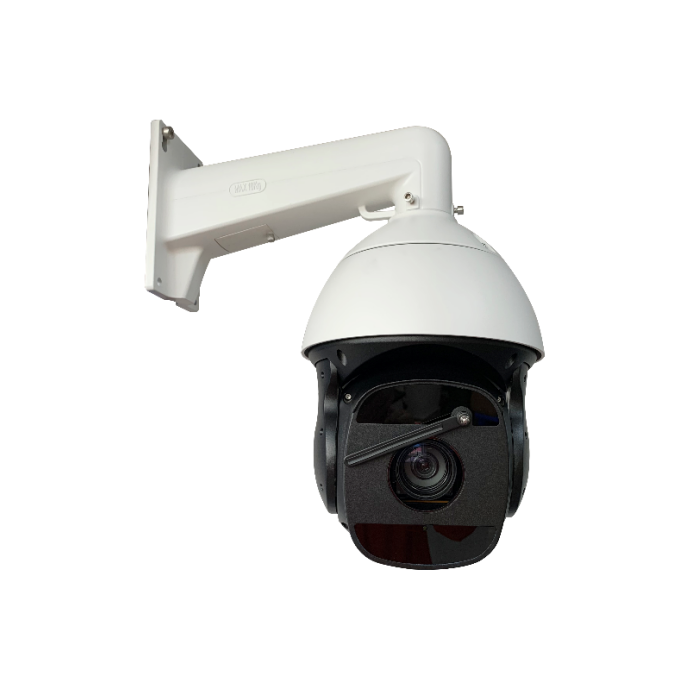
Your system cannot protect your site if it succumbs to Mother Nature. Weatherproofing is the absolute baseline for any exterior job.
Ingress Protection ratings define how well an enclosure seals out the elements. The first digit measures solid particle defense, like dust. The second digit measures liquid defense.
IP Rating | Dust Protection Level | Water Protection Level | Recommended Use Case |
|---|---|---|---|
IP65 | Totally dust-tight | Protected against low-pressure water jets | Underneath eaves or covered residential porches. |
IP66 | Totally dust-tight | Protected against strong water jets and heavy rain | Standard exposed outdoor installations on exterior walls. |
IP67 | Totally dust-tight | Protected against temporary immersion in water | Extreme weather areas, low-lying properties, or marine environments. |
Field engineers strongly advise a minimum of IP66 for exposed walls. This keeps internal circuits bone-dry during severe thunderstorms.
Extreme temperatures silently destroy electronics. Summer heat fries processors. Winter freezes mechanical PTZ gears and frosts over glass lenses. Premium outdoor units feature advanced thermal management. Built-in automatic heaters melt ice and stop condensation. Heat-dissipating metal chassis keep the system running smoothly during heatwaves.
Property owners constantly ask me a valid question. What if the intruder smashes the camera first? Physical vandal resistance is crucial.
IK ratings measure resistance to kinetic impact. The scale goes up to IK10 for maximum industrial protection. An IK10-rated housing survives a 5kg steel mass dropped from 40cm. That equals 20 joules of force. For high-risk areas, a thick polycarbonate dome and metal housing absorb shock. They protect the delicate internal lens from rocks and baseball bats.
Exposed wires are a massive vulnerability. A pair of wire cutters can blind your system in seconds. Purpose-built units use concealed cable management brackets. Wires route directly through the wall. Advanced models also feature digital anti-tamper alarms. If someone covers the lens with spray paint or violently twists the housing, the system instantly sends a push notification to your phone.
A camera is useless if it captures blurry blobs in the dark. Visual protection relies on superior optical engineering.
Traditional infrared LEDs only produce black-and-white video. That lacks the contrast needed to identify a suspect jacket color or a getaway car. The industry has moved to Starlight technology. These sensors use wider apertures to capture ambient moonlight, delivering crisp, full-color video at night. For zero-light environments, laser illumination pushes visibility much further.
Digital zoom just enlarges pixels, creating a blurry mess. Optical zoom uses moving glass lenses to magnify the subject without losing HD clarity. If you are monitoring a massive commercial parking lot, you need a Long Range Security Camera. For instance, models equipped with a 2MP sensor and a massive 90X optical zoom paired with Starlight Laser technology guarantee that distance never ruins your evidence. You can read a license plate from hundreds of feet away.
Old security systems were passive. They just recorded the crime. Today, the focus is proactive defense.
Eliminating the cover of darkness is highly effective. Motion-activated spotlights startle trespassers. They also provide light for the sensor to switch into full-color mode. Commercial cameras often add flashing red and blue strobe lights. This mimics law enforcement and creates a strong psychological deterrent.
Audible warnings work. Built-in, high-decibel sirens trigger automatically upon AI detection. Two-way audio uses noise-canceling mics and speakers. A security guard can safely confront a trespasser remotely. Shouting a simple warning usually stops a crime instantly.
Artificial Intelligence changed everything. We moved from annoying motion alerts to highly analytical monitoring.
Fixed cameras stare blindly at one spot. PTZ stands for Pan, Tilt, and Zoom. Motorized gears let the lens swivel 360 degrees, tilt vertically, and zoom in. This eliminates blind spots.
Old pixel-based motion detection triggered false alarms for swaying trees or stray dogs. Alert fatigue caused owners to ignore real threats. Modern AI algorithms recognize human and vehicle structures. You only get notified for genuine breaches.
The real magic happens when AI meets motorized mechanics. A Network PTZ Security Camera like a 2MP 36X Starlight IR model can autonomously lock onto a target. It pans, tilts, and zooms to keep the intruder perfectly centered. It physically follows them across the property. No evidence happens off-camera.
Based on recent field deployments and market search trends, the surveillance landscape is shifting rapidly. Buyers demand more than passive recording. The market is pivoting heavily toward edge-based AI analytics. Proactive deterrence is now a standard requirement. In addition, the integration of full-color night vision has moved from a luxury upgrade to a baseline expectation.
As cyber threats grow, robust data encryption is a massive priority. Manufacturers are locking down ecosystems to protect user privacy. We are also seeing a surge in hybrid solar-powered setups. These sustainable solutions allow for off-grid installations where trenching traditional power lines is simply too expensive or physically impossible.
Physical armor means nothing if a hacker deletes your video feed. Digital protection is just as critical.
Local storage on a Network Video Recorder keeps your data in-house without monthly fees. But if the recorder is stolen, your evidence vanishes. Cloud storage uploads clips to off-site servers. Field experts recommend a hybrid approach. Record continuously locally, but back up motion events to the cloud.
Internet-connected devices are potential gateways for hackers. Choose cameras with end-to-end encryption like AES-256. Change default manufacturer passwords immediately. Enable Two-Factor Authentication on your mobile app. This requires a secondary text code, blocking hackers even if they guess your password.
Selecting the right gear requires an honest look at your site. Here is a practical checklist for your next deployment.
Residential users typically need driveway monitoring and package protection. Smart cameras with active spotlights and two-way audio work best here. Business owners managing construction sites or retail fronts need industrial-grade gear. Prioritize IK10 vandal resistance and deep optical zoom.
Wireless cameras offer easy installation for hard-to-reach spots. However, they rely on Wi-Fi stability and require battery charging. Power over Ethernet wired cameras are the gold standard. One cable delivers continuous power and high-speed data. PoE systems never suffer from Wi-Fi jamming. They provide the massive bandwidth needed for complex AI tracking and high-definition streams.
Securing your perimeter takes more than just buying the cheapest camera on the shelf. You must evaluate weather resistance, low-light optics, and physical durability. High IK impact ratings protect your hardware investment from intentional damage. Strong digital encryption keeps your personal data safe.
Evaluate your property layout. Identify your blind spots. By combining active deterrence, AI tracking, and rugged construction, you build a system that actually stops threats. Ready to upgrade your perimeter defense? Explore the robust, field-tested solutions at FutureVision CCTV. Whether you need a heavy-duty industrial unit or a long-range PTZ powerhouse, you will find the exact hardware engineered to protect your property today.
For reliable outdoor use, IP66 is the standard baseline. It guarantees complete protection against dust and withstands heavy rain and high-pressure water jets. If the camera faces extreme marine environments or temporary submersion, upgrading to IP67 is highly recommended.
Yes. Hardwired PoE cameras transmit data directly through network cables to an NVR, requiring no Wi-Fi connection. Cellular security cameras utilize 4G LTE data plans, making them perfect for remote locations like construction sites or farms.
Standard IR cameras generally see between 60 to 100 feet. Advanced PTZ cameras equipped with Laser IR technology and powerful optical zoom lenses can see clearly from 300 feet up to several kilometers away in total darkness.
They are secure if you follow basic cybersecurity hygiene. Purchase from reputable manufacturers, change default passwords immediately, enable Two-Factor Authentication, and regularly update the firmware to patch vulnerabilities.
Industrial cameras are explicitly engineered for extreme durability. They feature heavy-duty metal housings, IK10 vandal-proof ratings, wide temperature tolerance, and advanced AI analytics designed to integrate into complex enterprise networks.
It depends on your storage setup. Cameras connected to a dedicated NVR usually record 24/7. Battery-powered wireless cameras typically only record short clips when motion is detected to conserve battery life and cloud storage space.
Proper grounding is essential. Install surge protectors on both the power and data lines. For PoE cameras, use shielded Ethernet cables and ensure the NVR is connected to an uninterruptible power supply with built-in surge protection.


